

|
Wednesday, March 16, 2011
Quick NoteI have confirmed with Citizens Insurance this morning that Citizens is now writing policies on houses with aluminum with a
few provisions. They are only accepting houses that have been "pig-tailed" with Alumiconn or Copalum connectors.
They also have to have a state certified, licensed electrician sign off on the house that the approved connectors were
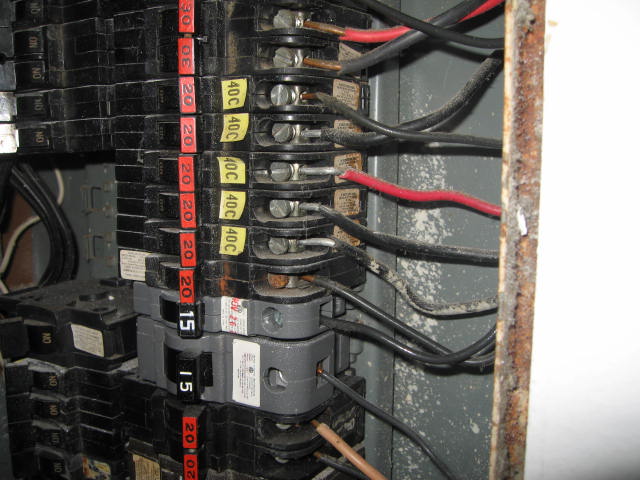
used and the aluminum wiring in the breaker panel is corrosion free, tight, and properly connected. They have finally
made the distinction between the 240 V circuits and the 110 branch circuits. All outlets, switches and fixtures will
need to be made up with either of these two connectors. These are NOT wire nuts, rather they are a proprietary system
tested by UL and NEC approved. Most "pig-tail" jobs that I've seen will not be accepted under the latest requirements.
The good news is that there is an alternative to the prospect of totally rewiring a house with copper. These requirements
can be met at about 1/10 of the cost of a total rewire. You can search for ALUMICONN or COPALUM and get all the info that
you need. if you are dealing with an aluminum wire house, buying or selling, this will need to be dealt with if the
house is going to be insurable. As it stands right now (as I've been told) Citizens is the only insurer of houses with
aluminum wiring and they are only insuring with these requirements met. I'm also told by Citizens that they are looking
at other ways of making the connections but for now these two are the only approved ones.
9:51 am edt
Saturday, March 5, 2011
DPBRNow I'm sure most people don't hear this very often much less say it, but, I can't believe how quick the Department of
Business and Professional Regulation of Florida moves these days! I suppose I just wanted to publicly acknowledge the
state for it's improvement in efficiency and speed. They keep saying they are getting better, leaner/meaner and faster,
and they really are. Last month I finally got around to submitting my granfathering application to the state
for my state home inspector license. The deadline to submit it was March 1st 2011 so I supposed I'd waited long enough
and I'm really glad I did. The reason I was putting it off was a very good one and it actually paid off. The state
originally wanted us to submit 120 inspection reports to prove the required 3 years of experience. So several months
back I pulled all 120 inspections from 2000-2001 because back then my inspections were much shorter. However even with
the "shorter" inspections, I was still gonna have to print out 3-4 reams of paper and ship them off to the state!
So I figured I'd take a small gamble and wait for the state to realize they can't possibly follow through with that
requirement, as they would have rooms filled with useless inspections that they couldn't possibly ever go through, and I'm
glad to say it worked. Instead of 120 full reports, they changed it to a LIST of 120 home inspections, what a huge difference!
Only took me an hour and 10 sheets of paper, I already had my list, just had to type it up. So I sent off my
application double, triple, and quadruple checked...and I had my state license 3 days after I sent it! I'm not sure
how the heck they got it done that quick, but they did and I couldn't be happier with my latest interaction with Florida's
DBPR. Now I have another state license to maintain, how fun. Well at least it seems maintaining that license
has gotten much easier with the greatly improved DBPR.
10:38 am est
Wednesday, October 13, 2010
Printing ReportsI just wanted to take a minute to explain some recent changes in how I get the inspection report to my clients. Not
too long ago I would develop the report on site and print it out, put it in a binding clear cover and give it to the customer.
That has become rapidly obsolete and I'll explain why. It started with the wind inspection changes
and a paradigm shift in the industry as a whole. Insurance companies started to want more and more pictures of wind
reports, roof reports, and four point reports. There is no outside driving force telling inspectors how to present their
general inspection reports to the client. As I found myself taking more and more photographs, I notice the customers
(especially ones that couldn't attend the inspections) responded positively the more pictures I took. Now it's not uncommon
to have 30-40 pictures on one report. Don't get me wrong, I took pictures before, but it was usually just areas of concern
or areas that I couldn't get the clients eyes on e.g. the attic. Another driving force behind the recent change
is software. I bought a very expensive program that allows me to do almost anything I can think of with any PDF document,
including creating them. All my reports were gradually converted from a Microsoft Office program, to an Adobe Acrobat.
The difference is that I create the inspection in Acrobat instead of converting an Office document later. That
has given me a LOT of flexibility on what I can do with my reports. I can make PDF binders which is great for reporting.
A binder is a PDF document that has my inspection report, invoice, picture pages (usually tiled 6 pics/page) all bound
into one contiguous report. That means parts of the report don't get separated and when I send a report it's only one
file per report. It makes it very easy for everyone. I also have a nice little gadget called a Bamboo Pen.
It allows me to capture a customers signature (ex. wind mitigation report) digitally so i don't have to print out a
report only to scan it back in to send it to the insurance companies. Insurance companies get a pristine digital PDF
of the wind mitigation survey with pictures attached. I've found the easier I can make it for my clients the better
the all around experience. They don't have to run around town bringing inspection reports to insurance companies. I
now have several options for my clients on how they receive the reports. Most of my customers want me to email them
the inspections so they can have it for their records and forward that very same email off to whoever they see fit (realtor,
insurance, mortgage etc). It makes the process very simple and all the digital images retain their original resolution.
I can also burn the inspection to a CD or just print it out. It's really up to the customer. Printing is
really the last option because of the photos. Printed out photos are OK, but you can't zoom in on them to see closer
detail and you can't send them easily to other parties that may request to see it. Keeping them digital is by far the
preferred method.
7:57 am edt
Monday, October 11, 2010
Citizen Wind Mitigation Re-inspection programI am one of the state of Florida approved inspectors to conduct wind mitigation inspections for Citizens insurance company.
These inspections are no different in "theory" than any other wind mitigation inspection however, they are
done to a much stricter standard than was previously acceptable. I'm doing all my wind mitigations to this standard
to ensure universal acceptance of my reports. I make sure that the insurance companies get all the information they
need the first time, so I don't have to bother my clients with a secondary inspection. Also as I understand it now,
because I am a preferred vendor my inspections will not be subjected to the re-inspection process. It wouldn't matter
to me if they were, it's just less hassle for my clients and the insurance companies that recommend my services.
6:28 pm edt
Thursday, February 25, 2010
Chinese DrywallI'm sure many of you have heard of the latest blight to our housing industry known as "chinese drywall". First
of all, do some research on your own. There is no special place on the web or elsewhere that I get my information from.
I do my own research and you can do the same. That being said, of course some people aren't capable of properly
inspecting their house for the possible problem. In this case an inspector can be of value. So what is
"Chinese Drywall". Well in this case it refers to wall board that was mined and manufactured from a couple
of mines in China. All chinese drywall isn't problematic for a couple of reasons. First of all most of the wall
board in the US wasn't/isn't made in China. Furthermore in some cases China sourced their raw materials from many different
areas (including the US) and just assembled the wallboard in China. So not all drywall/wallboard made in China isn't
"Chinese Drywall". On to the problems/risks. Well there are health risks/problems reported that
have been attributed to "Chinese Drywall" as well as mechanical issues. The health problems are much more
difficult to quantify and there are conflicting reports. There is also a mechanical problem that is much easier to quantify.
Much of the problems are contributed to a very high sulfur content when mixed with moisture basically creates sulfuric
acid that enhances corrosion on copper/aluminum water pipes and wiring. This is the easiest way to find out if you have
a problem. If the bad wallboard is in the house it will show itself by above normal levels of corrosion on the AC evaporator
coil and on the copper wires both in the outlets/switches and in some cases in the electrical panel. More information
on this on the "Must read" page on this website.
10:43 am est
|